
Ulysses S. Grant and the Ponzi Scheme
178 Columbia Heights, Brooklyn
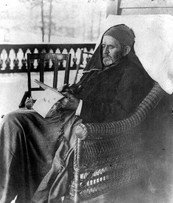
Ulysses S. Grant
On February 16, 2016 the home at 178 Columbia Heights was one of the properties on the New York City Landmark Preservation’s hearing calendar. The request to modify a window opening in the rear façade is a small one for the home which once housed the “best-hated man in the US” who sent General Ulysses S. Grant into crippling debt.
It was the fateful spring day of May 6, 1884 when General Ulysses S. Grant’s son stopped in at the office of Grant & Ward to greet his father with the words, “Father, you had better go home; the firm has failed.” Four years earlier, in 1880, General Grant’s son, Ulysses Jr., had opened a Wall Street brokerage house with business partner Ferdinand Ward. In that same year on September 23, Ward purchased 178 Columbia Heights for $40,000. Life was looking up for Ward, and as he continued to siphon money from the business, he outfitted his home in what the New York Herald called “regal splendor.” The Brooklyn Daily Eagle described the house as, “one of the most elaborately and expensively furnished houses in Brooklyn. The parlors resemble the private room of a Turkish prince, with its costly divans, rugs and bear skins scattered as if carelessly around. Every inch of wall is covered with some work of art, twenty-seven paintings, large and small, being in the front room and almost as many in the back room, while bric a brac and articles of virtu are in every position about the room.”
In 1883, General Grant invested $100,000 into Ward’s firm, making him a special partner. It was expected that the money would be used as collateral to borrow more money to trade, however Ward used the same money as collateral for multiple loans — a method of fraud today known as a Ponzi scheme. As fate would have it, several of the trades went bad and multiple loans came due simultaneously. To cover what Ward said was a temporary shortfall, General Grant borrowed $150,000 from New York businessman William Henry Vanderbilt. This was unfortunately lost along with his initial investment. While Grant attempted to sell most of his war memorabilia in an endeavor to honorably repay the loan, he was unable to repay the debt. Vanderbilt generously insisted that the loan had been paid in full despite the shortcomings of Grant’s available funds. As the downfall of the brokerage became known, Ward’s home was taken into possession by the authorities. Ward and his wife, along with their newborn son, were removed from the splendid house.
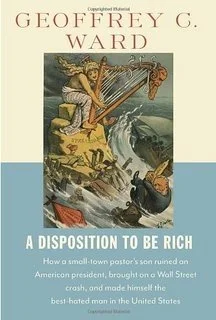
After over a year of court hearings while Ward was imprisoned in the local jail, he was convicted of grand larceny and sentenced to ten years of hard labor in Sing Sing. He became known as the “Young Napoleon of Finance” and the “Best-Hated Man in the United States.” His reputation was so nefarious that his own grandson wrote a book about him titled,A Disposition to Be Rich: How a Small-Town Pastor's Son Ruined an American President, Brought on a Wall Street Crash, and Made Himself the Best-Hated Man in the United States.
This scandal alone would have given 178 Columbia Heights quite a history, but it was not an isolated incident. Not long after Ward’s loss of the home, a subsequent owner, Adrian Van Sinderen, misappropriated funds as a trustee of the estate of a wealthy merchant, William Lawrence. The money, which was to go to nieces and nephews, was stolen over a period of 18 years by Van Sinderen. In 1885, one of the heirs noticed some irregularities in Van Sinderen’s business methods and in 1891 he too was indicted on grand larceny charges. However, he did not suffer the same fate as the home’s previous occupant. As soon as he was indicted he disappeared and was later discovered in Berlin. At that time, the US did not have an agreement with Germany to extradite embezzlers, so he was free from fear of arrest. He later died in 1905 having never returned to the US.
References:
Sanger to Ward, Deed, 28 September 1880, Liber 1403:276, New York Land Records, Kings County.
“Wall Street Startled,” The New York Times, 7 May 1884, p.1,c.1.
“Homeless,” Brooklyn Eagle, 9 May 1884, p.4, c.1.
Ward, Geoffrey C. A Disposition to Be Rich: Ferdinand Ward, the Greatest Swindler of the Gilded Age. New York: Vintage. 2012.
“Van Sinderen Is Not Dead,” Brooklyn Eagle, 11 November 1893, p.4., c.4.
